|
|
|
|
|
Matt
Fish
|
|
|
|
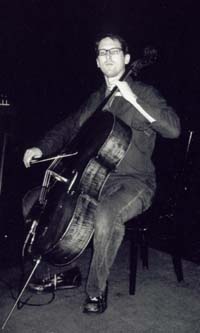
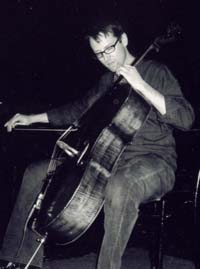
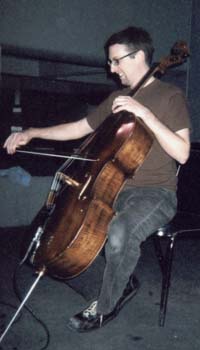
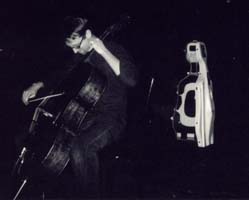
On the surface, Matt Fish is probably exactly what you would expect
from a cellist. Tall and lanky with
glasses, he fits the image perfectly. But, as soon as he gets on stage, his witty personality takes over as
the rhythm hits and he breaks all the cellist stereotypes. Whether it's rockin' out to Bon Jovi's
"Livin' on a Prayer" or Prince's "Starfish and Coffee," Fish shows that the
cello has a place in rock music. After
touring with singer/songwriter Matt Nathanson for close to two years, Fish is
now taking a break from touring to focus on film composing and his upcoming
wedding. Way Cool Music had a chance to
sit down with Fish in Northampton, MA to discuss being a classically trained
cellist in the pop music world, constant touring, and his life away from
music.
|
|
|
|
Way
Cool:
|
Can you describe for us just a little bit
what it was like growing up in small town Iowa, as the son of a minister, and
cello player? What was that like?
|
|
|
|
Matt
Fish:
|
Wow, well the thing is I didn't know any different. I had never been to NYC,
LA... hmmm... been to Chicago only I think once. So I was in Dubuque, IA and I just thought
that everyone lived like that. There
were white people as far as the eye could see, and it was just like, you know,
false sense of security and
all that sort of stuff. It was very
white bred and middle America. But I
didn't have a context outside of that to really know any better.
|
|
|
|
|
The
son of a pastor was always actually pretty great and I don't really know
why. It gave you a certain sense of
being different or significant in some way.
So that was really cool actually.
|
|
|
And
being a cellist was something that I really just suffered through. I
mean my mom got me through,
you know. And then I had success as it went. Teachers
would say, "Wow, this kid is really good.
You should keep doing this." I never really put that much thought into it. It wasn't until high school when I started
winning more and more competitions and stuff and going to see university
professors for lessons that I thought, "Well, maybe this could turn into
something."
|
|
|
|
|
|
|
WC:
|
So, along the years since you got out of school, you've done a lot
of work with a lot of different artists:
Matt Nathanson, David Hopkins, Noe Veneble. Can you describe for us what it's like to get 'the call' that
someone wants you to work with them? What's the songwriting process for you
in working with those different artists?
|
|
|
|
|
MF:
|
Usually
the songwriting process is done.
Getting the call to go on tour or do a gig, is always really fun, or
(to do a) session, they're totally differing things.
Probably the most memorable one was getting the call to do the Alejandro
(Escevedo) tour, because I had never
met Alejandro and I had just recently been in contact with his previous cellist
who still plays with him a lot, Brian Sandford, who's just this great guy. He and I had been emailing each other,
through Blu (Sanders) actually, because Blu lived in Austin and played with
Brian. And so he said, "You should meet
Brian" and he hooked us up with email
addresses. So, I had been in
touch with him. Somehow this world sort
of came together and literally within a few weeks, I think it was, maybe a month
or so, Alejandro gave me a call. Well,
I got a call from actually a bassist in San Francisco who Alejandro was having
help look for a cellist. So, anyway, it
was just the most exciting thing!
The reason that was so exciting was that we
didn't know each other. We weren't
friends ahead of time so I felt very, very professional like someone heard of
me from Austin, Texas and looked me up through contacts in LA and that felt
pretty kick ass. And everyone else had
been friends locally. I played in a
band in San Francisco and it was with a friend of mine, and he was my roommate
as well, who has gone on to be a film director. In that band, we would open for Matt and Matt would open for us
in San Francisco, so it was sort of a no-brainer. You would do that sort of stuff, especially in such a small
(music) scene. It was just
friends. David Hopkins is the same way,
Noe Veneble is the exact same way. I
mean, that was the venue. She opened
for us sometimes and vice versa. There were
just a few people in the San Francisco music scene at the time. It wasn't a really vibrant scene, it was
just who ever was there was gonna make it happen. You could tell who was going to make it and rise above. David Hopkins, Matt Nathanson, and Noe
Veneble are all among those people. And
there are people who we played with who are still playing the exact same cafes,
the exact same open mic nights on Wednesday nights, and the exact same songs.
|
|
|
|
WC:
|
You've played with so many different people and Alejandro's show
is so much different than playing with Matt.
How do you prepare for such very different styles of music as well as
the actual show itself?
|
|
|
|
MF:
|
That's
a really, really, really good question.
It's all about... I don't have
any idea. Let's see. (Recently) I played with Erin McKeown
and... uh... it's really about getting into their records and into their personality
through their records. That's the main
thing. That's why previously I was
saying I played with friends and so hanging out with people, getting to know
them, get to know their style of playing and you can see them play on their own
as well. It becomes almost second
nature because you know the kind of style, so it's really just a matter of
being sensitive to that, which I am because that's really who I am, like Mr.
Sensitive. And it's sort of a detriment
a lot of times, like when I have a panic attack or something, but it's also
very, very helpful to back people up and be a side musician. That sort of sensitivity is simply a
matter... it's just like having a conversation with someone. You're going to have a different
conversation with your mom than you would with your friend than you would with
your boss. Or than you would with
different friends. And that's really
what it is. It's not any preparation
that you can do on the cello. There's
no technical things you can do there, besides learn their songs, of course,
like the chords and stuff.
|
|
|
|
WC:
|
Along those lines, do you have someone who you think, "I so want
to work with them!" Who's the
aspiration of who your dream collaborator would be?
|
|
|
|
|
|
|
|
MF:
|
Yes
and no. It used to be the Indigo Girls
when they were good. They're just over
it now. They were at the top of the
fucking game. I met the cellist who
goes out with them, Matt Brubeck, Dave Brubeck's son. He lives in the Bay area
and I met him on some stuff. And it was
like, "I'm as good as he is!" And it
was like, "Oh my God! It would have
been great to get that gig!" Tori Amos
in sort of an intimate setting without the drum and bass would be great. And Bill Frisell is just an absolute
hero. I just don't have the jazz
chops. I just don't think I could keep
up. But, if I could ever play with him,
it would just blow my mind. That would
be a totally different kind of thing.
In terms of singer/songwriters, the weird thing is, I don't really have
any, so it doesn't even matter. So,
anyone I like. It just keeps coming
back to that. |
|
|
|
|
|
WC:
|
Would
you put a cello part in a song when you're hearing it?
|
|
|
|
|
MF:
|
Normally
no, and I actually need to do that more.
There is cellist named Jane Scarpantoni and she really toured with the
Indigo Girls. Matt Brubeck just did a
couple of shows. She also went on tour
with Lou Reed recently and I saw her. I
went to the show just to see her and she just blew me (away), so... there's a couple of
things: Lou Reed, add to that list for
sure. Elvis Costello as well. There are times when I've heard a cello solo
and it's when Jane Scarpantoni is playing on "10,000 Curfews," the live double
record. They did a cover of this other
song, I can't remember the title, but she had a cello solo in the middle of it
and I just had to learn that. It comes
up so rarely and it's actually sort of a problem. So I end up learning guitar solos. It's like in that Prince song, "Never Take the Place of Your Man,"
it's like trying to do a Prince guitar solo.
So then you're like "Why don't I fucking play the guitar?" There are so few cello solos that you're
like "Oh my god! That's the most
beautiful thing I've ever heard" So I did that with Cello Song, Nick Drake as
well, to learn that line. So anytime a
cello is featured, I'll do that, but it's very rare. Damien Rice, I haven't done that yet, it's still to be done,
because the cello is so featured on that record. So many times the cello is mixed down on records. Jane Scarpantoni has played on everyone's
record. The Beastie Boys, Nirvana, she was on it I think, I mean literally almost everyone, especially East Coast people she was
on, and you just don't hear it. You know the Beastie Boys record, you open it up
and are like,
"There's no way!"
|
|
|
|
WC:
|
Why
is that? Why do they bother to have
you? Does it do something to the
dynamics in the room when you're playing it and it just doesn't translate to
sound engineer?
|
|
|
|
MF:
|
I
think because... Well there's a group called Rasputina that has 3 cellos and
that's the signature sound, but cellos, I don't know... I think it's a matter of
people being like "Oh my god! We don't
know what this is and we have to get it out.
We have to have bass, drums, and guitar, and sometimes keyboard and
singing because it's very sort of..." I
mean songwriting is very sort of conservative art form in a lot of ways. There's originality but it's all
formula. And then you get through the
lyrics and everything, but the sounds,
that's not where the experimentation comes from really. People really don't feel comfortable
doing that kind of thing. Pop artists
aren't about pushing the envelope in terms of a weird sound, you
know? So it's more like jazz or avant
garde or new classical or even new age that you'll start to get some of that
stuff that's more featured. Or the odd
ballad or the Damien Rice. But even
Matt, we've been touring for 2 years and we played together before that and so
any live thing that we would do I would think it would open people's eyes as to what the cello can do because it's
always more rock than just always in the ballads, which is... The studio records,
with the exception of 'First Time' on Ernst, it's not about the cello. It's never really about the cello. New Coats and New Hats as well, that's cello
and piano. That's David Hopkins. It frustrates me, to tell you the truth,
that aspect of having the cello always mixed down. It's like, "Why even have you there?"
Strings and rock is really the problem.
It's like the good news and the bad news because it's never been a
rockin' string. And so one of my goals,
since I was a kid actually, was to bring the cello into rock because I loved
rock and I was stuck playing the cello, so I was like "I gotta make this work." Why the hell shouldn't you hear cello on a
rock album? What's wrong with
that? What about those kids playing
string instruments and that sort of stuff?
I think about them first because I was one of them; I felt limited and
thought I had to learn to play the guitar.
And one day I just said, "There's got to be another way. I don't have to play the guitar or the
bass." Because, frankly, everyone and
their dog plays those, do you know what I'm saying? Why shouldn't cello be more featured in rock. Listen to Yo Yo Ma, he's the best musician out
there in some ways and he doesn't have any balls. He doesn't play with...
He plays with his heart, absolutely, he
plays technically perfectly, but can he rock?
|
|
|
|
WC:
|
In
touring with Matt (Nathanson), we remember seeing you in late 2002. At first he introduced you and it was great;
you added to the show, but now people are professing their love to you and it
has really grown. Did you ever think
that it would come to this? Is it a
total surprise?
|
|
|
|
MF:
|
Honestly,
it's both. It's very, very surprising because
I didn't think the response would be like it is. And it's also surprising because I feel that I've gotten better
than I thought I would get. So that's
actually a really pleasant surprise. So
I think people are responding to something that moves them emotionally. And I think that's a result of trying to get
better at your instrument. I
thought I had reached a plateau and I have sometimes exceeded that and that's been
a surprise as well. So that sort of
outpouring of approval and love and all that sort of stuff... I don't know if it
surpri... Yeah, the amount of it is surprising.
But the part that's not surprising is that I've always known that it was
something I was good at. It's just a
thing. You pick it up and you have a
knack for it. I mean you don't
notice. But other people hear you and
say, 'Oh, you have a knack." "That guy's cool!" And you see people sort of watching what you're doing. And you're at a jam session, for example,
you see people come into the room and they watch what you're doing and you have
no idea why they are watching you versus the other 6 guitarists you're playing
with. You start to learn these
things at an early age. Plus, I practiced
being in rock bands when I was a little kid.
I was in a couple of air bands called the Chipmunks and we made fake
wooden basses. I was the bass player
and lead singer and my brother was the drummer and my best friend, Danny Carey,
was the guitar player, you know, and I was, like 7 or something. And so, I put on the big shades and we'd do
Eagles songs and some Bee Gees as well.
|
|
|
|
WC:
|
So
when you picked up the cello, it was never intended to just be a classical
instrument to you? It was the
instrument to make the music you wanted?
|
|
|
|
MF:
|
No,
it was always supposed to be just classical.
I started the piano first, the guitar next, and then the cello for real
in the 4th grade when I was 10.
That was the first time I had formal lessons...
no, I had piano lessons,
but it was the first time I really had continuity in terms of lessons. And then I got into more and more rock, but
I always played the guitar, so there was that disconnect again. The world of rock...
I was playing guitar and
was like (plays air guitar) and then I'd pick up the cello and was like, "Damn,
I'm so much better at the cello. This
sucks!" I wanted to just be able to do
what I wanted to do and I thought I had to do it on guitar because I wanted to
be in bands, but I was better at the cello.
Then one day, I had a vision.
I'm not making it up. I was in
Dubuque, IA on Highway 52 turning left onto Grandview, right? I forget the exact date, but it was in
wintertime. I know it was in the
winter; it was bleak there, all gray and everything, like Chicago, and there
was some snow. I was in the left turn
lane and I was driving our Buick Century shit brown station wagon and it came
together. That was the moment because I
saw it. I saw the electric cello, in my head for the first time. I had never seen it in real life. Believe it or not; you see them now, it didn't
exist. I had to practically invent the
thing. I had to use a bass pick-up for
the first time on my acoustic cello.
But I saw a true 100% electric cello.
It was like an electric guitar and cello combined. It's a pretty obvious idea
when you think of it, but it didn't exist.
So that was the vision where those two paths finally came together and I
said "Ah Ha!" And it took me years to
finally get the right electric cello sound.
Years, from that point. I saw
the neck and I was sitting there and it appeared. I was sitting in the car and I saw down the neck and I saw other
strings and it was all black and shiny like an electric guitar and it was fast
action. It was really fast and it was
all the neck of the cello but a weird body. I was still bowing and all of
that and it was plugged into an amp.
Yeah, that was that.
|
|
|
|
|
WC:
|
What
are some of the biggest changes have you noticed in the past two years touring
with Matt with your vantage point behind the cello?
|
|
|
|
|
MF:
|
Around
the live shows, the most personal and obvious think that is we just play really
well together. There is nothing like
playing night after night and playing live.
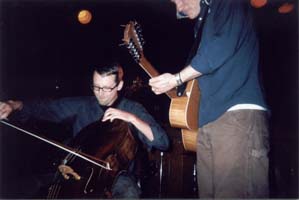
We just sort of finish each other's sentences and stuff. I know exactly where he's going to go. I mean, there's no move that would really
surprise me. There's that thing in the
middle of 'Lost Myself in Search of You' where he does that... sometimes I'll miss
where he's goes and stuff like that, but that's for fun, you know. Every other time it's done so tightly just
because we have the experience and there's no other way to do that but to do it
every single night.
|
|
|
|
|
|
|
WC:
|
So,
between you two, the communication is better.
|
|
|
|
MF:
|
Yeah,
the communication and we're playing more tightly together and that's such a
joy. That's a huge thing because that's
really what a band is about. It's like
breathing together and moving as a unit and they just know what's going to
happen next. It's funny because even if there's any sort of tension or
frustration or something that day, in general or between us, which there
usually isn't, but if there is, it just washes out on stage. It just really doesn't matter because
there's nothing like both people having the goal of having the best show
possible. And everything else is really
secondary to that, so, you know, it's... most of the time.
|
|
|
|
WC:
|
OK. So, what is the difference for you guys when
it's a seated show versus a standing show?
From our standpoint, when we're standing up, we're more involved in the
show, we're closer to the stage, we can feel the energy better. But for you guys, from the stage, what's it
like?
|
|
|
|
MF:
|
Yeah,
I have a lot more fun at the big rock shows where people are standing up. Back in the day, years ago, you're playing
coffee houses and stuff and everyone was doing the cappuccino machines, or the
espresso machines... (Makes coffee bean grinding noise) "Mark! Your latte is
up!" You know, and it sounds fucking
cool on the Wilco record, but nowhere else.
With classical music, everyone shuts up and listens. So, you're one goal (as
a cellist) is to just to get people
to fucking listen. So you're like, "Can
you please just shut up and listen! No
one talk or anything!" So, then you get
the seated situations and then you think, "Well, this is the best because
finally we have good sound and people are paying attention" and that sort of
stuff. But then you get into it a
little bit more and realize that rock isn't about that and you get past
it. But it's great because people are
paying attention and yelling, but it's for you. So there's more visceral energy.
That's really the only way to describe it. I mean, the cliche about the crowd being a part of the band and
influencing the band is so absolutely true. It's not even a cliche. That sort of yelling and screaming and
energy is so much more exciting and once you do that, you can never go back. And so...
exactly what you were saying. It's more interesting for you to be a part
of that crowd as well. Maybe it feels
more interactive, or maybe it's just more energetic... And with listening room(s) with such a... you're not supposed to
yell and scream when you have dinner on the table. And so people aren't yelling at the same
places and you think you're doing something wrong, you know. I play a solo and, you know...
maybe 'Answering
Machine' and I'm ending and people are sort of, you know, the golf clap or whatever. And you're like, "I don't really dig
this! I wanna fucking rock!" So once you pass through the coffee shop
phase to finally you get people to listen phase and into the... you're like "You
know what, this is way, way more fun when there are hundreds of people
screaming and chanting and fucking singing along." That just feels fucking great.
|
|
|
|
WC:
|
So
how far into a set do you know it's going to be a good show for you guys?
|
|
|
|
MF:
|
That's
a great question! Matt always...
very
often we will have very different nights, which really sort of contradicts the
communication answer I gave a little while ago. And that's really a wacky thing.
Although, I can always understand what he means, I often don't share
that. It seems like he might have more
worse shows. But see, we played (a
college show) recently, and it was in a fucking cafeteria and the sound was
hideous and we're on a 6-inch stage and people are looking at us like (blank
stare) the whole time. And they're
eating their fries when they're doing it.
And there's a big TV behind us, one of those projector TVs, the cheesy
kind. And Matt was like, "That's the
best show on the tour so far!" And I
thought it was crap and so did Jeremy (the tour manager) and so did Kevin (the
sound guy) and we're like, "Are you high dude?
What are you talking about?"
But, for some reason he loved it.
So, I can't explain that portion of it.
I think it's reverse psychology.
He's just trying to do that to say, "I like the really small shows. And I don't like the high-pressure
shows." Trying to be cool, by
trying
to not be cool. So I think he's trying to do reverse psychology there. It's when you start to be able to think
about it... It's like in sex when you're like, "What should I do next?" And you're ruined! You know what I mean?
|
|
|
|
|
WC:
|
Should
I do Move A or Move B?
|
|
|
|
|
MF:
|
Yes! Exactly!
You're like, "How should I move my tongue? This way or that way?" No.
And then you're bored. And it's
not so much boredom; it's just a lack of energy and it just happens. There's nothing you can do. You're not in the moment. But (if), we played 'Lucky Boy' and 'Wings'
after Matt opened with something, it was great. But the problem was that it was too great. It was too much energy. It was too powerful in the beginning and
where do you go? And then we go
downhill. The other thing that makes a
huge difference is... Well there are a bazillion factors, but monitors and
different crowd energy are just pretty much it. I mean, we can do just about anything with a great crowd and
amazing monitors. It just doesn't
matter, it doesn't matter how tired we might be, or what kind of mood we might
be in. Those two things will fix it. But beyond that, it's really just...
the only
way you know is when you're outside thinking.
When you begin to be just like anyone else in the room... Like if you
were to walk in the room and think "I'll sit there and have a beer" you know
what you're doing and there's a consciousness going on. You can't be in that mental space. I don't know how to describe it, but you
probably know what I'm talking about, using sex as that metaphor. If you're thinking about it, you're
lost.
|
|
|
|
WC:
|
And
so when you have an off day (on the road), which I know doesn't happen very
often, or if you're in a town for more than one day, and you're not sick, what
do you like to do on you're off time?
If you have two or three hours in a city, what do you like to do?
|
|
|
|
MF:
|
Shop.
|
|
|
|
WC:
|
Really? For what?
|
|
|
|
MF:
|
Shoes
and pants and stuff like that. I don't
buy CDs, Matt buys a lot of CDs... but you can always tell. Every (town)
has
it's own unique character and personality, but also every town has the same
characteristics. You know, where do you
find the cool place? It's Little Four
Points in Atlanta, in San Francisco, there are a bunch of them. In New York, it's the whole place. New York is just a party. But here it's Harvard Square. You find a place where you can get good
food, you can go in and sit down and have a good, fucking great meal.
The other thing I like to do is sneak into
multiplexes and watch movies all day long... three or four at a time with one bargain
matinee ticket. I've done
that many, many times, because that's
often the only culture I can get because I can't sit. I'm too A.D.D. to be
reading all the time and I can't just sit there and read. And it's not like you
have your own room to read in, so
there's no real place to go, so you need to get out to a restaurant or
whatever.
But it's always got to be
that cool shopping area...and then, Urban Outfitters, that's fun, so shopping for
clothes. Target is really good for
clothing now. Surprisingly good. I have some army pants I just got. I got these in Canada with Alejandro and I
got these pants I'm wearing right now in Kansas City. I got this in New York and I got this in Seattle. Literally, it's all touring clothes. That's funny, I never thought of it. It's like the international...
|
|
|
|
WC:
|
Very
international! So, when you're not on
the road, when you're not in the studio and when you're at home, what is the
non-cellist part of Matt Fish? What do
you like to do?
|
|
|
|
MF:
|
That's
a good question. Oh man, this is hard
because I usually organize because I don't naturally have a lot of fun. It's like, going to movies all day for
example, I never do that at home. I'll
get up and say, "Oh my God.
The bathroom has to be cleaned and vacuumed. And oh my God, the dishes!" And I have to do the dishes first because I have to do things in
order because I'm really sort of anal and a control freak. And so I have to pick everything up and make
sure all the laundry is done and make sure the bed is made and just sort of go
around and around and around. And I
love watching Oprah. I'm not kidding
about that. I really do. And if Margaret is not home...
if she is home
during the day, like when she had her surgery and stuff, we'll watch Oprah
together and stuff like that. It's the
best. So, I'm scrambling around is
essentially what it is. It's like a
chicken with its head cut off.
|
|
|
|
|
|
|
|
So
the other thing I do besides that sort of little nitty-gritty not cool
stuff is go to my studio. And that's
the time I give myself that I think is sort of the core of my own private time,
if you will. It's not...
you know, the cello
comes really natural to me and it's part of my identity and always will
be. But being able to compose has a
special place as well, but it's much more contained and private and it hasn't
been, sort of, out in the world. So,
I'm getting older and all that sort of stuff, so it has to at some point. That's really the thing. I have a full sized keyboard and I play the
piano and I have my Mac G4 in the recording studio and a mic and I'm writing
songs and I'll play the guitar and bass and have a drum machine. So, I'll
make songs and it's a totally separate space.
It's a separate space and I'll actually drive to it. And once I get everything done at home and
get all the bills paid and I'm done with the dishes, then I'll go to the studio
and that's the best. I feel
I reserve that for last and I feel like I need to flip that on its head so I
prioritize that kind of work.
|
|
|
|
|
|
WC:
|
And
so you have that sort of stuff that you compose on your own, when are we gonna
see a Matt Fish solo cello show, and what's that going to be like?
|
|
|
|
|
MF:
|
Great,
great, great question. Ummm, when I
can't say. I mean, I could take some
stabs, but it would come off sort of half assed, so I may as well not say. Only because I just don't have a clue. I know in the queue of projects, it's
probably fifth of five fairly major projects, unfortunately. And the only reason
is that it's
not fully formed. And that's one of the
problems of constantly being a side musician.
You don't think in terms of having a vision to for a particular record
or a vision to carry your own career or direction. And so one of the major problems with a Matt Fish, either
solo record or show, is that it's not... You ask what it's going to be like and
that's the major problem. It's the
reason that it's fifth of five projects right now. It's because it doesn't have a unifying element. It doesn't have that theme. It's like, what kind of music is it going to
be? Taped backing, synth backing, or do
you have a band with you? I mean, I've
thought of many, many things and so I could throw things out, but it would be
like throwing out dates. I can give you
examples of what I've thought about and hopefully something will emerge and
evolve out of that. I've thought about
a piano player and drummer, and me and cello as a lead instrument. Now, that's instrumental only so I have
major reservations about that because I don't want it to be, you know... Spinal
Tap, the bass player did the jazz odyssey and, you know, the bass player was
always waiting to do his jazz odyssey, and it was clearly the self-indulgent
crap that no one would fucking pay to hear.
So, I really, really don't want it to be that. I want it to be edited songs that are songs in their own
right. And so it's that song writing
skill that I don't have enough confidence in, to really say with any sort of definitiveness, "This is what it's
going to be like."
|
|
|
|
WC:
|
Do
you have any finished songs? Or are
they all works in progress?
|
|
|
|
MF:
|
Yes, I do, but I'm
not happy with them. The idea being,
much like... I'm trying to think of a good metaphor. Sales is one, but it seems sort of crass. Anything that you do...
well, even sales. Let's say you want to try to find a loan or
something. Or you want to start a
Kentucky Fried Chicken business and Colonel Sanders wants to find investors.
Let's call it investing, not sales. So,
you go to 100 people, 150 people to find that one thing that works. My friend Andy Stochansky wrote 40 some
songs and whittled it down to 12 on his record. So, that ratio is pretty good, it's a reasonable ratio. But he spent a year writing all of those 40
songs. So, I've got this hodge-podge of
like, here's a song, there's a song, here's a song and it's been... I collected some
in this thing I call corn water, but I don't release it. It's just the songs I had
at the time and it's just really,
really sophomoric stuff. It's like hearing someone play the trombone
for the first time. You're a
beginner. And it's like, 'they suck at
the trombone.' So, I'm not going to be
good. The same is true with every songwriter; it's just that you never heard
all their crap. You only hear the best
stuff. And I haven't done enough
work. It simply comes down to
that. I just haven't. And that comes down to prioritizing
again. Am I prioritizing this
particular job? So, I have a batch of
songs, I would say and some of it recorded.
|
|
|
|
WC:
|
Is
it your own need to be creative in that way, to actually put your own music out
versus playing on other people's project, or is it what's expected of you? Where's the motivation?
|
|
|
|
MF:
|
That's
a great, great question. This question is a little bit an ego question and a little
bit not. Half of it's a really crass
economic answer. Part of it is that
everyone wants to be a star and I really, really look inward and
say, "Look, I don't need that. It's not
who I am." You really have to know
yourself and it's like I'm not that guy.
I don't have the hair for it, you know?
I don't have the whatever, the muscles, the looks, whatever. I don't have it. And that's a factor you have to continually think about. There are people who were born to be
frontmen and there are people who were not.
And I don't think I'm one of those frontmen. However, I think I'm a better musician than a lot of the people
that I have accompanied, for example.
So, I have to reconcile that and I have to say that I have something
more to give and I have something more to show the world. And that's not bullshit.
The economic half of the answer is about
ownership. When you make your living as
a musician, you have to keep your finger a little bit on the business side of
things, on the pulse of the business, and that's the reality of the
situation. The fact is that songwriters
and the people who have any ownership stake in anything are the only ones who,
over time, have rights to continually make money and they begin to leverage
that. So, it's the difference between,
really sort of, the haves and have nots in the music business. Frankly, it's that way in any
business. I mean, you can work for people
or you can have people work for you. It's creating intellectual assets.
I know it sounds really...
even the word asset sounds like a banker, but
it's so important.
|
|
|
|
WC:
|
So,
on your CD, you could have 40 number 1 hits but if you're the studio musician
on it, that's all it is.
|
|
|
|
MF:
|
That's
right. And you're paid for that one
day. And it's that project. And you say, "Well, I took part of that in
some way" but there's no... And you also have to look at yourself and say, is that
about control? And some of it is, but
it's only... only if you think you can do a better job. John Cougar Mellencamp, for example, was a cameraman when he was
a young kid in Indiana, right? So he
was at this local TV station... that's where I went to school, Bloomington,
IN. And he was filming a folk singer or something and he was saying, "I can
do better than that." And that's sort of
the feeling, you know?
|
|
|
|
|
WC:
|
You
mentioned that you are working on... that you're solo career is fifth in a line of
projects, what are the other four projects that you're working on that are top
priority?
|
|
|
|
|
MF:
|
Film
music demos are number 1. And the demo is
only so that I can get a gig scoring a film and I really need to do that by
year's end, so that's a big one. I want
to take that demo to Sundance, to have an orchestra actually record those
queues. Probably have 10 queues or so,
about a minute each, have an accompanying DVD so that it has pictures along
with what I'm writing because you have to write to pictures so people can see
how you'd write to film. That's number
1. Ummm...
I should be able to remember
this... uhhhh, that's actually... there are actually only four (projects) because
there's one of them that's due earlier.
There's a Turner Movie Classics and they have a competition every year
called 'Young Film Composers' competition, so that's actually the first priority
and then the demo becomes second priority, but that score that I would do for
the competition goes onto the demo. And
then the 3rd one is getting a wedding music business started so that
I have income in other forms besides than touring.
I've already recorded a string quartet
demo and that simply involves getting a package together. It's downhill from here and
then going to the right people saying, "Here's the package, please hire us" and
then either I can go out to those gigs or I can broker those and I can start to
make money that way. And it's something
I can do with my eyes closed.
|
|
|
|
WC:
|
Because
of all the contacts you've made over the years.
|
|
|
|
MF:
|
Exactly. And it's an income source along with
lessons, which is why it's number three.
And then the 4th one is a solo classical music kind of cello
record and that's simply just to get into the studio, just to get my chops up,
even more on the cello and to pick out 10 songs that may or may not be
classical, maybe they're just solo cello, but not something that I'd write, so
I don't have the burden of trying to conceive of something, trying to create and
trying produce at the same time. I'll
just simply say, "I'm just the cellist, that's my only job, and I'm going to record
and I just have to execute these songs."
And, you know, I'm also in the process of choosing those right now. So that's why then that solo record is
fifth.
|
|
|
|
|
|
|
WC:
|
OK,
what one piece of information or bit of Matt Fish knowledge do you think people
would be surprised to know about you?
|
|
|
|
MF:
|
One
bit of info. I wrote a book. I co-authored a book about the World Wide
Web. "How the World Wide Web Works". It's published by Ziff Davis Press. It's part of the 'How Things Work' series.
|
|
|
|
WC:
|
Was
it with Al Gore?
|
|
|
|
MF:
|
Ha! Did you come up with it right now? "Was it with Al Gore?" "We invented the
internet."
|
|
|
|
WC:
|
Finally,
we have a game very similar to the Craig Kilbourne 5 questions.
|
|
|
|
|
MF:
|
Oh! I love that! |
|
|
|
|
WC:
|
Ours
is called 7 questions. Completely
unrelated, we won't follow-up, just top of the mind answers.
|
|
|
|
|
|

|
|
|
|
|
What's the worst job
you've ever had? Wendy's - 2 weeks
|
|
|
|
|
|
What's your favorite
movie or lyric quote? Airplane - "Surely you
must be joking" "I'm not, and don't call me Shirley." I fucking love that!
|
|
|
|
|
|
Who would you want to
star in the movie of your life? Oh my
god! Toby Maguire.
|
|
|
|
|
|
What's your favorite TV
theme song? Either Magnum P.I. or
Airwolf. Airwolf rocks!
|
|
|
|
|
|
If you were a
superhero, what would your name be?
Captain Cello. I'm sorry,
but top of mind, that's...
|
|
|
|
|
|
What do you want to be
when you grow up? Oh! A film composer.
|
|
|
|
|
|
Finally, why are there
so many songs about rainbows?
(Laughs) You know
what! We were just talking about
that. Were you guys talking about
this with us? No, no, we're like,
"Were they high?" There aren't
that many songs about rainbows.
|
|
|
|
|
|
WC:
|
We know!
|
|
|
|
MF:
|
There simply aren't.
That's the answer. Those rainbow
songs... there's not that fucking many. I
don't know one besides ('The Rainbow Connection').
|
|
|
|
WC:
|
'Somewhere Over the Rainbow' and 'The Rainbow Connection.'
|
|
|
|
MF:
|
Yeah. So, that's my
answer. There aren't so many songs
about rainbows except two. That does not
a collection make. Do you know what I'm
saying?
|
|
|
|
WC:
|
Exactly!
|
|
|
|
|
|
|
|
|
WC:
|
Well, those are
all the questions we have for you Matt.
Thanks so much for taking time to talk with us.
|
|
|
|
MF:
|
You're totally welcome.
|
|
|
|
To find out more information about Matt Fish and his
touring plans, visit his website at www.mattfish.com.
|
|
|
|
|
|
|
|