|
|
|
|
|
Edie
Carey
|
|
|
|
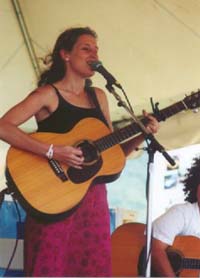
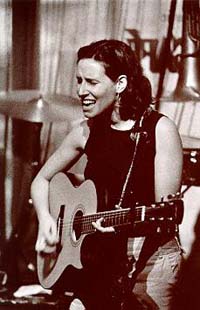
In many ways, Edie Carey is like every other singer/songwriter struggling
to make it in the music world. She
picked up the guitar in college, began writing songs of heartache and hope,
found a supportive music venue to call home, and made some fans along the
way. But when you look at her list of
accomplishments, including a nomination for the Independent Music Awards Album
of the Year and Campus Awards Female Artist of the Year, you realize that Edie
has managed to set herself apart from the rest. Edie was kind enough to talk on the phone with Way Cool Music in
May to talk about her creative process, relationships, and plans for the future.
|
|
|
|
Way
Cool:
|
Can
you briefly describe your background and how you got involved in the music
industry?
|
|
|
|
|
Edie
Carey: |
It
was not something that I planned, which I think is the answer for most people
in the industry. I had been involved
with music my whole life, with bands and A Cappella groups and stuff like that. I started playing guitar right at the
beginning of college. Shortly
thereafter I started writing songs, but I certainly wasn't thinking,
"Oh! If I do this then I could be
a famous songwriter!" It was like
I finally had an instrument with which I could finally write some songs. I thought it would be fun and exciting to
try. I had always written really
terrible poetry and short stories and I had always been a singer. I loved words and I love singing, but
without an instrument, I couldn't really marry those two things. So, once I started doing that, as soon as I
started playing guitar my freshman year (of college), I was obsessed. I wouldn't stop! I thought maybe I had stumbled onto something. I played a little bit in my room throughout
college and then when I went to Bologna, Italy for my junior year abroad, I played
constantly. I played out on the streets
and on the main piazza for change and I thought it would be a good place to
practice since no one could understand my words. By the time I got back senior year, I started playing on campus
over at Barnard and Columbia. Then I
started playing out. I think by the
time I got back from Italy I was pretty sure I at least wanted to give it a
try; to see if I could get a gig. But I
thought I would just get a job and it would something I'd do at night, but it
began to snowball and people started to come back and go to shows and it
happened organically, I guess.
Certainly I've done a whole lot of work to make it happen, but I just
sort of felt moved to make it happen.
Since then, I've just been touring.
A little tiny decision to buy a guitar sort of changed everything for
me.
|
|
|
|
| WC:
|
And
how did you decide to use the guitar as your instrument?
|
|
|
|
|
|
|
EC:
|
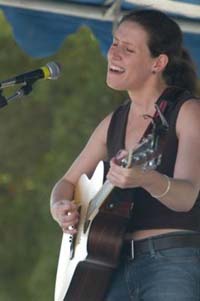
I
think, first because it was portable and easy.
I had always wanted to learn how to play piano, but I really started to
listen to singer/songwriter-type music when I was a sophomore in high
school. I first heard Shawn Colvin and
was like, "Oh my God!" It changed my
whole life; changed the music that I listened to completely. I started going to the miniscule folk section
at my local record store and tried to find anyone who sounded remotely like her
and found Patty Larkin, Christine Lavin, all those New York singer/songwriters,
and early Susanne Vega and Lucy Kaplansky, although Lucy at that point wasn't
doing her own stuff. I just tried to
find people like that because I was obsessed with music that actually said
something and was literate and beautiful.
I loved pop music and still listen to it, but there was something about
that kind of music that knocked me out.
The common denominator was that they were all great singers and all
great guitar players. That was one
reason I picked it.
|
|
|
|
|
|
|
|
Also
during my freshman year at Barnard, I sort of stumbled upon this little club
called the Post Crypt. It's down in the
basement of St. Paul's chapel on Columbia's campus. And one night my friend was like, "Oh, we're going to see this
woman named Ani Defranco" I was like,
"Yeah, whatever, I don't know." I was
skeptical that she was going to suck. I
didn't know who she was; I just went because my friends were going. The place is tiny; it holds at the most 40
people and That's a fire hazard. I saw
her play that night and I completely lost it.
I was crying through the whole thing.
I just had a really strong reaction to her music and after that I was
obsessed with Post Crypt. I went every
week. It was Friday and Saturday night
all through the school year. I went and
saw Lisa Loeb. And I saw people like
Ellis Paul and those folks play that room and seeing them made me feel that,
"Oh, there's a possibility that you can actually make a living playing the
songs that you write!" Seeing that
really made a huge difference and really pushed me to buy a guitar at the end
of that year.
|
|
|
|
WC:
|
Now
you recently spent a month on the road with Melissa Ferrick and got to visit
some new markets and cities for you.
What was the reception during that tour for your music?
|
|
|
|
EC:
|
It
was great! Touring with her is
incredibly fulfilling in that I get to tour with one of my favorite people,
favorite musicians, and I learn so much from her. To able to get to open for her audience, which is already such an
incredibly excited audience, they just love this kind of music! Melissa and I are very different in some
ways, so sometimes I'm not sure that I'm going to go over well, or that I don't
rock hard enough, but you have to be yourself.
You can't pretend to be more rock than you are. So, in fact, it's a good way for me to say,
"Hey.! This is who I am." If they like it, they like it. If they don't, they don't But I think people can see through if you're
trying to be something you're not just to fit the occasion. I love playing with her. Her audiences are amazing and so
responsive. At times it's hard because
they do tend to talk a lot at her shows and I play quieter songs, but at times,
that sort of helped. I could use that
to my advantage. I would often time
say, "If you guys will be really quiet for 3 minutes during this finger-picked,
quiet song, I'll take off my shirt." I
would make jokes. Obviously, I never
did it. But, it sort of kicks your butt
sometimes when you're playing for an audience That's so riled up and you have
to try to harness that energy and make it work for you, not against you.
It
was great! I always sell a ton of CDs
and the best part is that you really plant seeds by doing that opener. In fact, on this next tour I'm about to do
out west, I'm going back to Arizona, where I'd never toured before, to Phoenix
and Tucson, in the same clubs I played with Melissa. So, that helps enormously.
You hope that people remember you and come back to support your solo
shows.
|
|
|
|
WC:
|
Your
latest CD, When I Was Made, is receiving a lot of recognition from some
impressive people, including the nomination for the Independent Music Awards
Album of the Year. What does it mean
for you personally as well as professionally to be "critically acclaimed?"
|
|
|
|
EC:
|
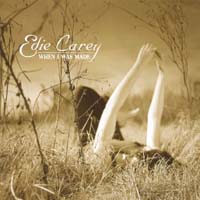
I
don't really think of myself that way at all.
I wish I did, but I feel like· It feels great that people really like
the record because I really like it. I
guess it would make me really sad if I really liked it and everyone else hated
it, but at the same time, I think I'd be proud of myself for sticking to my
guns, I guess. I feel like I really had
a vision for how I wanted to grow on this album and I feel, in many ways, that
this is my first record, even though it's my fourth. I made my first CD when I was 24 and had just gotten out of
college and was just going to make a demo and it turned into a CD. Not to take away from those CDs, because I
think there are some good things on there and if they didn't exist, I wouldn't
have the fan base I have now, which is incredibly supportive. Some of those people like my first record
the best and that makes me so happy!
But, I feel like this is the record I listen to when I don't want to
jump off a bridge. Of course, I could
listen to this record in a year and be like, "Oh my God! I can't believe I made that choice." You're always going to feel that way. But, for the first time, when I made this
CD, I went into it with an idea of what I wanted to do, the sound I wanted to
go for, and the kinds of songs I wanted to be on there. I've done that before in the past, but
things always got railroaded in one direction or another because of certain
circumstances or money or whatever.
Something happens and it doesn't end up where you wanted it to go. You might be happy with the final result,
but it's still different from what you originally planned. (With this CD) I felt so pleased because I
had an idea in my head and it actually came through into fruition in the way I
wanted.
|
|
|
|
|
|
My
producer, Evan Brubaker, has been my friend for 5 years, so he's seen me
through a lot of stuff. He was very
honest with me and said, "I want you to sing differently on this record. I want you to own the age that you are. Be 29."
Well, at the time, I was 28. "And
sing like you've had this experience in your life. You can sing really high and sing in a really pretty voice, but
why not just sing the songs?" That's
the approach I took and that seems to be the way people are responding to it;
that it's more of a grown-up record.
it's
really cool and I'm so happy that people like it! But, I'm sort of scared too.
It's like, "God!! If people
really like this one, they're gonna hate what I do next." And, "Is that all I'm ever going to
do?" I think every artist feels that
way. I'm excited that people like it,
though. It makes me feel really happy!
|
|
|
|
|
WC:
|
That's
good that you enjoy it as well as the fans.
You spent time in Maine when you were putting the CD together. Why did you choose Maine?
|
|
|
|
EC:
|
I
grew up spending my summers up in Tenants Harbor, which is about 2 hours north
of Portland. It's a street that my
whole family was on. My great
grandfather bought this bit of land at the turn of the century for a basically
a song; he paid nothing for it! It's
just this magical place. I walk down
the street and my third and fourth cousins live on this road. I don't even know half of them.
There's
just something about Maine that makes me want to write. I think it's also because I associate it
with being off a little bit. I'm not on
the road, I'm not touring, I'm not booking, I'm just up there to rest and go to
bed at a normal hour and write. It's a
quiet place, very rural. There's no TV,
There's barely radio reception. Any
time I have time off, I just go write and That's where I go. I try to go on the off-season so There's
nobody around I need to be social with.
That's always the place. So,
when I was writing songs for this record, That's where I went. I was there for about 3 weeks in 2002 and
just wrote everyday for hours and hours and hours.
|
|
|
|
WC:
|
Maine
is my favorite place.
|
|
|
|
EC:
|
Really! Where do you go?
|
|
|
|
WC:
|
I
go to Portland. I could spend the rest
of my life there and be perfectly content.
|
|
|
|
EC:
|
I
know. The winters there sort of
suck. I actually almost moved to
Portland. Before I moved to Atlanta, I
was going to leave New York no matter what, and I went and looked at apartments
in Portland. I went during
Christmas-time and it was so frickin' cold.
I didn't think I could handle it.
So, I went the opposite direction.
I do love it. I think a lot of
people who go there feel that There's just a sort of magic about it.
|
|
|
|
WC:
|
One
of my favorite songs off the CD is 'With Our Hands.' In that song, you make reference to a previous relationship you
had with a fellow singer/songwriter.
Beyond 'With Our Hands,' how has that relationships, and others, impacted
your songwriting?
|
|
|
|
EC:
|
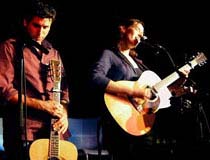
That
particular relationship influenced a lot of my songs on Call Me Home and
on the new one. I think that was a long
and intense relationship for me. I
think a lot of people know it was Teddy Goldstein, and a lot of people don't
know that too. We just did this tour
together in the Midwest and we've never toured just the two of us. It's always been with Live From New York
(LFNY). We've always sort of chose to
keep our relationship on the quiet side.
I don't know why, but we just felt it was easier. Also, if we broke up, we could still do LFNY
and people wouldn't know. We've been
broken up for 3 years now and the fact that we're still friends and play
together is amazing. That doesn't mean it's
always easy, but we always make the joke that if you want to know about our
relationship, just buy our last 2 albums!
That will clear it right up.
|
|
|
|
|
|
|
It's
an intense thing to be a songwriter and be with a songwriter because you both
process things in the same way, but you look to the next song to·songs can be
prophetic, which is sort of scary. He
would write a new song, and I'd think, "Oh, what is this one going to say? What does this mean?" Or he'd write some beautiful love song and
I'd be like, AOL, we're going to be Ok."
Whatever it was. It was
stupid! It's a very intense thing. I know just as well as he does that I'm
telling the truth in my songs. It can
be kind of scary. You can have your
real life together, but also have this constant subtext of the songs you are
writing. It's odd. I know people who can do it and have no
problem with it, but I think it was definitely hard.
Also,
when you're a songwriting couple, one of you is always going to feel like, "Oh,
am I doing as well as he is?" Or, "Am I
doing as well as she is?" Or, "He's got
that gig and I didn't We weren't that
competitive, but it definitely would come out at times. I don't know. Some people can do it, but we couldn't. The fact that we're still friends and adore each other is a minor
miracle. We've been through a lot, but
I just think he's amazing.
|
|
|
|
WC:
|
How
do you move beyond the angry love songs?
Every songwriter has relationship stories they want to tell, but what
inspires you beyond the boyfriend/girlfriend drama?
|
|
|
|
EC:
|
I
think That's a good question. I think
every songwriter starts from that place and sort of spirals outward. I definitely write a lot about romantic
love, but more than that, I write about human relationships. I write about my dad, my mom, my sister, and
my friends, and things that they are going through. Sometimes I'll write them from first person because it makes
me·whenever I'm listening to other people's music, if It's written from first
person, I definitely identify more. I'm
not a big fan of "he, she" "he, she" "he, she" all the time. I think, "OK, we know the song's about
you! Just write the song from your
perspective!"
Basically,
songs come from stories that I can't get out of my head. I have a song on my second album called
'Black Wool Dress' which was inspired by 2 different things. It was inspired by the JFK Jr. plane crash
and I kept thinking that Carolyn Bissett's mom had lost, not one daughter, but
two daughters in one day. I really
couldn't get it out of my head. You
hear horrible things on the news every day, so it's interesting to see what
actually sticks in your brain. I was
just really haunted by that.
I
was thinking about that after it happened, and then a friend of mine had gone
to a funeral for a family friend of his, a 15-year old girl who had been killed
in a car accident. He talked about going
to her funeral and walking in and seeing the mother surrounded by all these
people and she kept on saying, It's just so sad. It's terrible, isn't it?"
It was almost like it happened to somebody else. She wasn't acting as though it was her own
daughter who died in the car accident.
She was sort of consoling someone else.
It was like that was the only way she could process it.
I kept thinking about this mother who had lost her
daughter and what an unnatural thing it is for your child to die before you,
and thinking about that mother/daughter bond.
I feel like in many ways that I didn't write that song. It was somebody else's story. It came up and kept tugging at my sleeve
until finally I wanted to write it. I
don't play it very often. I have a
really hard time singing that song.
It's really emotional. People
who don't know me think that I had a child who died, or·I don't know. It's really weird. Songs can be so creepy sometimes.
That's
where my songs usually come from. I
think It's really important to write about other things. For me, because my parents were divorced,
love relationships have always been a central theme for me. I'm always trying to figure them out because
I didn't have parents that lived in the same house. So, I think everyone has their thing That's a central font of
pain and, therefore, inspiration. But,
the hope is that you can rise above that and get the bitching and moaning out
of the way and then hopefully find some way to transcend that and say, "OK,
this really hurt a lot, but what can I do to make this make me stronger." I think It's important to get through that
bitching and moaning. You're always
going to want to bitch and moan, but I think the better songwriter you are
usually corresponds to how long you've been able to be out of the bitching and
moaning stage.
|
|
|
|
WC:
|
Kind
of switching gears to touring, you've played some great venues including Club
Passim, the Bitter End, and various other places. What are some of your favorite venues to play?
|
|
|
|
EC:
|
I'd
say Passim is definitely right up there.
The only reason I would say It's not my favorite has nothing to do with
the club. I've had such amazing
experiences playing there that I almost have a heart attack whenever I play
shows there because I think I'm going to screw it up; that I'm somehow going to
somehow destroy the spell of this club, or I'm going to have a terrible show,
or something bad is going to happen.
There is something so magical about that venue and I don't even know
what it is. LFNY often talks about
it. Every time we play there together,
there's something about that room that makes people feel so comfortable and
responsive and they are so respectful and they really listen, but then they go
wild with applause. I think That's also
Boston; It's sort of that environment loves that kind of music. That's the only reason I would say It's not
my favorite venue. But, Passim is by
far the best.
My
other favorite is Post Crypt. I still
play there once a year, usually with Teddy.
It's so tiny and hot, but It's the first place that ever gave me a gig
when I was a senior. They used to not
let students play there, but I had this friend who was my first official
fan. She was friends with the woman who
was booking it at the time. When I had
to do a live audition in her apartment, it was the most nerve-racking thing
I've ever done in my whole entire life.
She gave me a gig when I was still a student and it was so
exciting! Obviously, It's very
different to play there now. It's been a long time, but It's still magical to
me. Also, it was the place where I fell
in love with this kind of music.
I
really love doing house concerts, too.
There's just no interruption. So
often you play a club, which may be an amazing club with a fantastic
reputation, but the sound may be so-so and that gets between you and the
audience, or there are too many distracting things going on, or some big chasm
between where you're standing and the audience. I think any setting where you can get the songs across in the
least interrupted form is ideal. Passim
is killer at that.
|
|
|
|
WC:
|
you've
mentioned Live From New York a few times.
Can you describe for our readers the interaction between the four of
you?
|
|
|
|
EC:
|
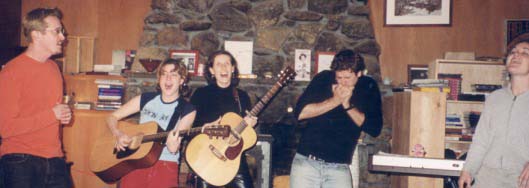
LFNY
is Teddy Goldstein, Anne Heaton, Andrew Kerr, and me. Originally it was Sam Shaber, Ina May Wool, who is another NY
singer/songwriter, and the 4 of us. We
all met in the open mike, playing our first gig in the New York songwriter
scene in the late Î90s. I guess we all
met in '97 or '98. The whole idea of
Live From New York came up because we were all going to this conference,
Northeast Regional Folk Alliance Conference, and we thought we'd set up our own
showcase. We thought we'd call it Live
From New York. It made sense; we were
all from NY. It went so well and there
was such a synergy that was immediate.
We all knew each other's songs from playing around each other so
much. I think Matt Smith, who books
Passim, saw it and said, ãYou guys should play this as a show. There are such great harmonies and everybody
knows each other's stuff. Why don't you
come and play Club Passim?ä So, we
actually did the Living Room in NY first and it went so well that we went and
did Club Passim.
|
|
|
|
|
|
|
|
People
just seemed to respond to the energy between us all. We all really love each other, which I think is really apparent
on stage. We give each other a lot of
shit, but I think you can only do that with people with whom you have a mutual
trust and understanding. There's always
been this sense when you're on stage that you're totally safe because if
something goes wrong, Andrew will be there to hand you a new chord immediately,
or slip you a battery when your guitar dies.
You feel so incredibly supported.
It immediately felt like a team and That's such an appealing thing when
you play by yourself all the time. It's
nice to have your buddies around.
That's
how it came about and we've been touring around as the four of us, although we're
not touring really so much now because of Andrew's baby and Anne's new record
coming out, but I'm sure we'll do more shows together. It just won't be as often; It's just too
hard with our four different schedules.
|
|
|
|
WC:
|
Is
there any co-writing that goes on between the four of you?
|
|
|
|
EC:
|
Not
officially. Although, often times if
we're on tour together or have a few shows together, and we're working on stuff
that we've been working on by ourselves, we'll bring it to the group and say,
"Can you help me with this? I feel this
bridge is missing something." We never
have official co-writing sessions.
However, 'Under a Sky' on my new CD, I played it for Anne and she was
helpful. Then I played it for Teddy
when I saw him a few days later. Then I
played it for Andrew. Although they
didn't give me any words, they really had such good ideas. It's so helpful to have people with whom you
feel totally safe and comfortable; you can be vulnerable in front of them and
say, "Does this totally suck? What can
I do to make this better?" I think we
do that for each other all the time.
We're a little support group.
It's good, though, and we can be honest with each other too. You know when someone says something is
good, you can believe them; they're not just blowing smoke!
|
|
|
|
WC:
|
What's
your typical day like, as a songwriter and doing the Accidental Poet Productions
stuff? What do you do on a typical day?
|
|
|
|
EC:
|
A
typical day when I'm at home is getting up at 7:15. I'm a morning person and get a lot done in the morning. I do probably four to five hours of email a
day. I still do my own booking,
although That's probably going to change soon.
I have a full time manager and have been reluctant to get a booking
agent because I'm already giving away a lot of my income. I do a ton of email, a lot of it is booking,
a lot of it is writing fans back who write me to ask questions or see about
shows. Then It's putting together press
kits and sending those outs, although Matt, my manager, helps me out. I just do a lot of administrative stuff;
stuff as big as strategizing where I want to be in a year and what steps I need
to take to be there to making copies of my email list to send to my email
management company. You're everyone
from secretary to CEO for sure. It's a
lot of paper work.
When
I'm at home, I think, "OK, I finished that tour and it was great. Now I have to prepare for the next four months
and make sure I have work coming in.ä
Doing my booking is not that hard in that I've been doing it so long
that I have some amazing, supportive contacts.
I just have to make a phone call or things just automatically come
in. I also have an amazing college
booking agent who's helping me figure some of that stuff out. That definitely helps to pay the bills.
|
|
|
|
|
|
It's
putting together tours and going out on them.
I actually find touring much less stressful than being home. There's only so much you can do
administratively when you're driving.
Basically your whole goal is to get from show to show then you get up
and drive again, get some food, and play again. It's sort of the bare minimum when you're on the road. Then things pile up and you come home and
you have a 2-inch think pile of papers you need to do stuff with. I hate that. Coming home is a rude awakening sometimes. It's great because you're so excited to be
home, but then you think of all the stuff you need to get done.
It's
a lot of juggling, but It's so worth it.
When you do what you love, you really don't care. It's just part of the process.
|
|
|
|
|
WC:
|
How
long is your typical tour? When you
talk about going out on the road, are you talking about a month or a couple of
weeks?
|
|
|
|
EC:
|
Before
I moved to Atlanta to be with my boyfriend, Travis, I was single and touring
constantly. Since I was in NY,
everything is so close, so I would basically almost tour constantly. I would come home for 2 or 3 days at a time
to refuel and pick up things and do laundry and then leave again. I didn't really have much of a reason to be
at home. My closest friends, except for
a few of them, were musicians who I would see on the road. My other friends who have more normal lives,
I would see in the few days I was home.
I'd have dinner with them and then leave.
Then,
when I started seeing Travis, I thought, ãOh!
There's a reason to be home. I
don't need to be playing all the time.ä
I actually set a goal for myself that I would go from playing 28 days a
month to more like two weeks. So,
basically I try to be out two to three weeks a month. I try to keep it down to two, but sometimes It's just not possible
because you're out in the middle of the country and you have to drive home; two
days out and two days back. That's my
goal. I'd really like to get down to 10
days a month. I've been doing this for
five years and I haven't been home for more than a month since 1999 and I'm
tired! I love it and I'm so energized
from playing and the fact that It's growing makes me feel great, that people
are coming back and bringing friends. I
think that the fact that I'm still making a living from this is great and makes
me so happy.
My
priorities are definitely shifting. I'm
turning 30 this year and want to be home with my friends and Travis and have a
life and work on my house. I didn't
have that stuff before, so I didn't really care. I thought, ãI'm 27, 28, I should be touring as much as I possibly
can.ä So, things have shifted slightly
for sure, but I can't imagine not ever doing this; cutting this out all
together, there's just no way. I think
if I didn't sing, I'd go nutty.
|
|
|
|
WC:
|
So,
with shifting priorities, where do you see yourself in the next five years? When you think ahead, what do you see
yourself doing?
|
|
|
|
EC:
|
I
hope that I'll still be doing this, but I think in a more compact fashion in
that my career would be running itself more.
I'll probably hire a booking agent in the next year, for sure, which
would make things a lot easier. What
I'd like to do is to be touring less.
About a year ago, I made a conscious decision not to play gigs that were
really going to make me feel sad, even if the money was decent. It just wasn't worth it. That's made a huge difference. It just wasn't worth it to do those gigs
anymore. For so long, It's feast or
famine and you think, ãI should just take the gig because is $200 I wouldn't
otherwise have.ä You start to realize
that money doesn't cover it if It's going to make you exhausted or wear out
your voice or you're going to be fighting with loud drunk people. It's just not worth it.
I
would like to make my tours shorter and more effective. I think the idea is that if you're making
more money per gig, you should play less gigs.
I would definitely like to go out for a while and then be home for a
while. So, rather than going out every
month, going out for two months straight, then coming home for two months
straight. That would be so much more
ideal. What I'd like to do is take six
months off all together and regroup.
That would give me time to plan my tour with enough leeway. I think I could do it that way. But, you have to stop long enough in order
to plan a tour that large.
Do
that and just keep making CDs. I love
being independent, but at this point, after five years of doing it by myself,
I'm not totally against the idea of being with a small indie label if it were
with the absolute right label. In fact,
we got offered a deal for the new record, but when we did the math, it wasn't
really worth it. I'm making so much
more money on my own. This label didn't
really have a great track record for knowing how to promote an album, so I
thought I could do a better job doing my own publicity and radio. It was great that they wanted to do it, but
it made me realize that being independent can be better. All a big label does for you is give you
money to promote it. That's great if
they chose to promote it, but they could put it on a shelf and never look at it
again. They have every right to do
that. It's kind of scary! So, I'm not against signing with a small
indie label if It's the right deal, but That's down the road. It's not something I'm actively seeking
out. I just want to keep doing what I'm
doing and get better at it.
|
|
|
|
WC:
|
Beyond
music, what do you like to do? How do
you like to spend your time?
|
|
|
|
EC:
|
Oh! I like camping a lot. I actually just got done renovating my
office over the weekend. I really like
doing home things. My boyfriend and I
are totally into that kind of stuff.
It's funny because he likes decorating more than I do. It's great!
We both really enjoy doing stuff like that.
|
|
|
I
really try to have a life that doesn't have anything to do with music when I'm
home. I sort of forget that this is
what I do, even though I'm doing the work for it all day long. We go out and do stupid things, like go to
trivia night at our local bar, play pool, or see a ton of movies. We both really love camping. I love hanging out with my family. My little sister is 10 and I hang out with
her and go to her soccer games when I'm in Boston. I do stuff with her. She
loves music so much and I'm worried that she'll want to do this too!
I
think It's really healthy to have a life.
I know a lot of artists whose whole entire being is about music
non-stop. they're on from the minute
they get up to the minute they go to bed.
I understand that and I think when you're running your own company, it
makes sense that It's all consuming. I
was starting to head down that road before I met Travis. I think It's good and healthy to be around
people who have nothing to do with this at all.
|
|
|
|
|
|
|
I
try to go on trips that have nothing to do with music. I'm going to Italy this fall with my best
friend who I met when I was living in Bologna.
We're going there for a friend's wedding and then we're going on a
girl's trip, traveling around together and going to places we never went to
when we lived there. Just doing stuff
that has nothing to do with music is so important because then when you come back,
you feel renewed and you're excited about it.
But, It's hard to let go of sometimes.
It's a lot of work and you worry about it and you want it to go the
right way and sometimes they don't.
Walking away from it and doing something else sometimes is really good.
|
|
|
|
WC:
|
Our
final set of questions is called 7 questions.
It's top-of-mind, no follow up.
|
|
|
|
|
|

|
|
|
|
|
What's the worst job
you've ever had? Hands
down! I waitressed at a place in NY
between my sophomore and junior years of college. It was the worst job I ever had because I went to work at 9:00 at
night and I didn't get home until 7:00 in the morning. It was the night shift and all these mafia
guys come in for the weekend to hang out with their girlfriends and drink Sex
on the Beach and peach schnapps. That's
fine, I didn't really care, It's just that it was all night and I'm not a night
person at all. It was such a struggle
for me to be awake. But the worst part
of the job was that all the tables were made of slate, so you could draw on
them with chalk. But, at the end of your shift, at 6:30 in the morning, after
waiting tables all night, you had to sand all of your tables! I'm not even talking about wiping them
down. They hand you sandpaper and you
had to sand your tables which took 45 minutes.
It was so awful! Basically, if
you put anything hot or cold on the table, it stains it so you have to
completely renew the surface. It was
the worst job ever! And I'm such a good
girl and never want to get in trouble, but I walked in there one night, the
night I was planning on quitting. I had
a boss who was a screamer, she screamed constantly at everyone and
everything. I walked in there that
night and heard her screaming and I realized that I couldn't do it. I couldn't be there one more night. So, I walked away and ran home to my apartment
singing with my hair flowing behind me.
I had never been so happy in my entire life! I never went back.
|
|
|
|
|
|
Favorite
movie quote or song lyric? It
would probably be in my favorite song which is 'Polaroids' by Shawn Colvin. Basically the whole song. But, if I had to
pick, I'd say: But forests in
German/Kids in the Tuileries/Broken-down fortresses/In old Italy/And claiming
his victory/Shrouded in misery/He went running away with me." I just think It's so beautiful.
|
|
|
|
|
|
Who would you want to
star in the movie of your life? Sandra
Bullock.
|
|
|
|
|
|
What's your favorite TV
theme song? The
theme from Family Ties. Sha-la-la-la.
|
|
|
|
|
|
If you were a
superhero, what would your name be?
I
don't know. I have this really high-pitched voice that I can do That's kinda piercing. It really scares my dog and Travis. So, I guess I would be Piercing Voice Lady. I could break glass with it and that would
be my weapon. I could do it now, but
you might be scared.
|
|
|
|
|
|
What do you want to be
when you grow up? Someone
who slows down to appreciate things.
And a mom. I really want to be a
mom some day.
|
|
|
|
|
|
Finally, why are there
so many songs about rainbows?
Because
rainbows are visions, but only illusions.
And they have nothing to hide...
I guess because they are magical and give people something to believe
in. And they're pretty.
|
|
|
|
|
|
|
|
To find out more information about Edie
Carey, visit her website at www.ediecarey.com.
|
|
|
|
|
|
|
|