|
|
|
|
|
Brian
McDonald
|
|
|
|
When
you imagine a successful career
in music, you might envision being
on a reunion tour of one of your
favorite bands, or perhaps getting
to meet your music idol, or maybe
even opening for a legend like Elvis
Costello. But you've got to be one
lucky guy to experience all of those
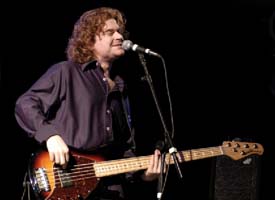
events. Bass player, Brian McDonald
definitely has had luck on his side
in the past few years. During a
recent conversation, Brian talked
to Way Cool Music about supporting
Toad the Wet Sprocket in their 2003
reunion tour, meeting Brian Wilson,
and the afternoon he opened for
Elvis Costello at one festival,
and then traveled to Summerfest
in Milwaukee to open for The Wallflowers
that same night. He is the luckiest
guy I know.
|
|
|
|
WC:
|
Tell
us a little bit about your background.
|
|
|
|
|
Brian
McDonald:
|
I
grew up in a little town called
Huntley, IL that is now being rapidly
swallowed up by suburbia. It's a
little farm town. I guess my first
musical thing was high school chorus.
It was a small school, so my music
teacher from the third grade was
my teacher up through high school
chorus. The cool thing about her
was that she'd teach us classical
stuff like Bach and Mozart and all
those choral pieces, and at the
same time she'd also teach us the
Beach Boys. That was kick ass for
me because I was introduced to them
by learning to sing them. So, when
I really got into them and the production
values, I could sing all the different
parts to 'Surfer Girl.' I had that
in my back pocket, which was great.
So, I learned harmony from her and
my mom, who was in the church choir.
She would always be singing along
to the harmony part and I would
say, "Sing the melody!"
So, I got sucked in that way.
|
|
|
|
|
|
| A
few of my friends in 7th and 8th
grade bought electric guitars and
it seemed like a few older classmen
had them as well. It was great.
And, they all needed a bass player.
I had taken guitar lessons through
the park district and learned basic
chords, and my mom taught me the
basic chords too. I could kinda
fake it by ear and have been doing
that ever since. You can't call
me a real musician. I'm not going
to play that! I had some great influences
growing up. Out in farm-ville, it
really is just Judas Priest and
Def Leppard and all that crap. I
didn't really get into good music
on a regular basis until college.
I was lucky to be introduced to
The Beatles, The Beach Boys, Fleetwood
Mac, and The Doobie Brothers through
my parents. When I was in college,
Nirvana hit and the whole world
changed. That's when I was really
like, "Oh! I could do that!"
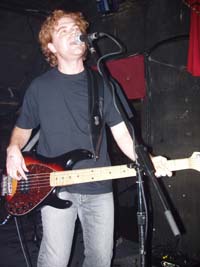
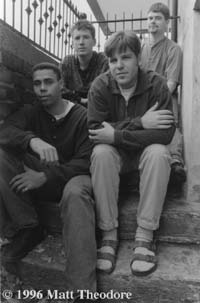
Then, we started Shimmer (Pat Donahoe,
Chris Gilmartin, Brian McDonald,
and Aaron Modica) in college, freshman
year, and we were at that for ten
and a half years. We busted our
asses and put together a couple
of records and played everywhere
we could to five or fifty people.
It was awesome. I remember when
we played Metro (popular venue in
Chicago) for the first time, it
was actually an Aware Records showcase,
and to me, that was IT! I made it!
Anything from there on was kinda
gravy. And I've had a lot of gravy.
|
|
|
|
|
|
|
|
WC:
|
How
many years after playing for five
people did the Aware Metro show
come about?
|
|
|
|
|
BM:
|
Six
or seven maybe. But, we were fortunate
enough that our drummer was in a
fraternity, so we could drag those
guys out. And it doesn't really
matter how good you are, it matters
how much beer they sell. That's
the key. If you have a shitload
of friends, you can be in a band.
You can tell the ones that just
have friends and the ones who pay
attention to what they're doing.
But I'd like to think we did both.
We got a lot of use out of those
people who were loyal to us and
to what we were doing. We started
out as a cover band and grew into
what we were. Chris really emerged
as a great songwriter and Pat's
a great musician, just a pure, cerebral
musician who knew exactly what he
wanted from his guitar and how he
wanted his band to sound. It was
a great combination.
|
|
|
|
|
WC:
|
Were
any of you studying music formally
in college or did you just get together
and think that it was fun?
|
|
|
|
|
BM:
|
Pat
was a Jimmy Page fan, so that's
where he studied. He studied Led
Zeppelin records. Chris was originally
the keyboard player and back-up
singer. Aaron just liked to beat
on drums and I could just kinda
fake my way by ear. We never studied
officially.
|
|
|
|
|
|
| 
|
|
WC:
|
Was
bass the only instrument you were
playing at that point?
|
|
|
|
|
|
|
BM:
|
Yeah.
I think I played guitar on one song
at that point, but I was the bass
player in Shimmer.
|
|
|
|
|
|
|
WC:
|
What
do you think some of your strengths
and weaknesses are as a musician?
|
|
|
|
|
|
|
BM:
|
I
can't read charts, so that automatically
takes me out of a lot of studio
work. On the other hand, I know
what sounds good. And I know my
way around my gear. I don't have
the theory background that sometimes
I wish I had. But, a lot of people
that are very entrenched in the
theory background, some of them
tell me it's a good thing that I
don't have that hanging me up. I'm
not going to the fifth when I'm
supposed to, or I'm not doing those
things that you might be taught
to do. Maybe that's a good thing.
|
|
|
|
|
|
WC:
|
You've
been in a number of different bands
including Shimmer, Starch Martins,
and Alice (Peacock). Describe the
differences between those band experiences.
|
|
|
|
|
BM:
|
Well,
they've all been great. I've never
had a bad band experience. Shimmer
was cool because there really were
no rules. We could be a rock band
or a pop band. Or we could be acoustic
singer/songwriter or we would jam
when we wanted to. And, we all had
a vested stake in it. We all formed
the band and when we put songs together,
Chris would come with an idea, and
Pat would dress it up, and we would
all really collaborate. As your
first band, you have amazing experiences
with that. Any time you do something
for the first time, you learn everything
the hard way, and we learned everything
the hard way. I think our first
album cost $15,000 or something
like that. We had to play gigs just
to pay that back. It took us a good
3 or 10 years to pay that back.
But, when we were recording it,
we didn't want the snare coming
through the tom mic. Looking back
on it, what the fuck were we thinking?
But, we were making our masterpiece
and there are a lot of great memories
around that. We thought that once
we made the record, we'd be the
biggest thing in the world.
Then
we came to Chicago and things started
to pick up a little. And then we
just got shunned a little bit and
jaded. When Aaron left, that was
kinda my out. As it turns out, Chris
is writing great stuff on his own;
Pat is in the middle of a bidding
war and will probably get signed
with his band (www.redshirtmusic.com)
soon; and Aaron owns his own business.
So it all works out in the end.
We all are very close still and
chat when we can.
|
|
|
|
|
WC:
|
How
many first bands, though, stay together?
|
|
|
|
|
BM:
|
Well,
there are a few that have become
successful. I think the testament
to Shimmer is that we stayed together
and we weren't successful. We stayed
together and believed in what we
were doing. We stuck to it because
we really, really believed in what
we were creating.
When
I left Shimmer, I wanted to take
a break and just not be in a band
for a while. Then, I met Dick (Prall).
I met him at some party and he had
already finished tracking the bass
lines for the (Starch Martins) album.
Of course I met him the day after
he finished! I was able to watch
the record get the finishing touches
on it. I was able to sit in the
control room and have everything
drilled into my head, so that by
the time rehearsals came around,
I was pretty versed in it and I
was able to pull it off. Once again,
I faked my way through it.
Ed
(Breckenfeld) was there (on drums)
and that's when I realized that
there's a difference between professional
musicians and guys that play. And
Ed is a pro. We had a great time
as the Starchies.
|
|
|
|
|
|
| After
awhile, though, Dick wanted to be
on the road, which was great. But,
you can only do that for so long
without help and it got to be really
hard. I was just burned out. So,
what happened was that I started
to get a little more into the recording
stuff and heard this guy who lived
below me, writing these songs I
could hear through the
floor vents, and
sometimes he would sing me to sleep.
Sometimes, I would think, "Oh!
Go to a different change! You should
really do..." So, that's how
I met Cameron (McGill). He was my
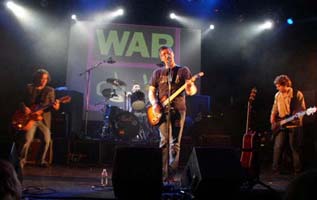
downstairs neighbor and I started
recording with Cameron as a demo
thing. We were going to make a little
acoustic record and that kind of
morphed into this production that
was his record.
|
|
|
|
|
|
|
|
WC:
|
What
was your role on Cameron's record?
|
|
|
|
|
BM:
|
At
first, I was just recording. I was
just the engineer guy. If I heard
something, I would throw it out there
and he would come in and hear it
and like it or not. We didn't really
discuss if I was going to be the
producer or multi-instrumentalist
or what. I had all of Paul Stebner's
(Starch Martins) gear in my apartment
and all of my gear and a shitload
of different instruments. So I tried
to use them in a way that was creative.
And that was cool because I didn't
play bass on that record. I like
stepping out of that a little bit.
And Cameron has this great thing
going on. He's an amazing live performer
first off and he's got a great voice,
so it was a no-brainer for me.
As
the record was kind of getting to
a critical phase, I heard a rumor
that Alice (Peacock) was looking
for someone. I hadn't heard of her,
but a friend of a friend told a
friend of a friend and I just followed
up on it. I was in a job that I
hated, in a cube, like 'Office Space.'
Yeah. I was hating life and then
the Alice gig showed up out of the
blue. At that point, she had already
gotten signed and they wanted to
get her out on the road, so she
was looking to put something together
right away. I was lucky enough to
get in at the right time. That was
cool.
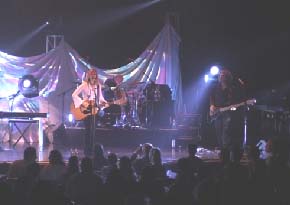
I
had never been in a band with a
girl, so it was a whole new thing.
My experience with Alice has been
nothing but great. Once again, I
had stumbled my way into a lucky
position. I was the first band guy
hired and then we did auditions
for drummers and guitar players.
We came up with Nick (Kitsos) and
Danny (Howes). Nick was with us
through the first Mellencamp tour,
he was the drummer, and toured the
majority of the Toad tour.
|
|
|
|
|
|
|
|
|
The
whole Alice experience was amazing!
We worked that record and now we
have some down time and I'm back playing
with Dick. And that's great because
Dick is kind of like a good home
base for me. If you like the Beatles
and the Pixies, you like Dick. It
doesn't take much to get it because
the songwriting is so accessible
and so easy to like. His melodies
are great. He's one of the best
writers out there, I think. He's
miles beyond what you hear on the
radio.
|
|
|
|
|
|
WC:
|
How
did being in Shimmer and Starch
Martins and playing with Cameron
prepare you for being a touring
musician and being on the road for
such a long time?
|
|
|
|
|
BM:
|
First,
I should say that Alice was on the
road for a couple of years before
I even joined her band. I'm still
decompressing, but I'm glad to hear
she's gardening and
involved with other things in between
records. She
toured her brains out!
Nothing
really prepared me for the arena
thing. That's just a head-game and
it fucks with your ego a little
bit too. You've got to go on stage
not paying attention to the people
you're playing for because you've
got to be on. Your head has to be
totally on stage. But, when the
lights go down and 50,000 people
start screaming, then you've got
to start thinking, "OK, do
I deserve
to be here?" even if you don't
and even if it's just the music
gods giving you a gift. That was
just an situation where I had to
block out the people and play to
the band.
The
rest of the shows were clubs and
theaters. I had done that with Dick
and Shimmer. But nothing really
prepares you for what weird things
happen during shows, like if you
guitar goes out in front of 1,000
people or whatever. You just have
wing that. You just do your best.
|
|
|
|
|
WC:
|
Tell
us about playing in the Philippines.
|
|
|
|
|
BM:
|
That
was a trip, man! Sony Philippines
had been working 'Bliss,' and low
and behold, it went to number one
and they wanted us over there. So,
when we got there, it was just gigs
in Manila and it was lots of radio.
We'd do six or seven performances
a day. We'd be up at 7:00 or 8:00
and we'd go from radio station to
radio station playing on the air.
We did about three or four TV performances
and four or five gigs. They worked
us! It wasn't a vacation. It wasn't
like I could see scenic Manila.
|
|
|
|
|
|
| Manila
is a wild place because you'll see
these shopping malls that are monstrous
and endless. It's a very consumer-y
place. And, you'll see a guy outside
with an Uzi guarding the place and
then you'll go down the road and,
if you look the right way, you'll
see chickens and naked babies in
the road. You get the third-world
aspect and then the Americanized-consumerized-imported
feel as well. The day before we
left, the air traffic control tower
got taken by terrorists and they
all got shot and killed. They just
mopped up the blood and planes took
off again. It's a different world.
I
had never been out of the country
before, so it was very eye opening.
I look forward to going to London
or somewhere like that. It was intense,
but it was very educational and
great.
|
|
|
|
|
|
|
|
WC:
|
How
long were you there?
|
|
|
|
|
BM:
|
A
week or ten days. I think it was
a week. It was just Manila. I hear
that the country is a lot like Hawaii,
but unfortunately, we didn't get
to see any of that. I've never been
to Hawaii, but we had to stop there
to fuel up, so I saw Hawaii from
the tarmac. I hear it's gorgeous.
|
|
|
|
|
WC:
|
Of
all the tours you've gone on, what's
the most exciting tour you've been
on?
|
|
|
|
|
BM:
|
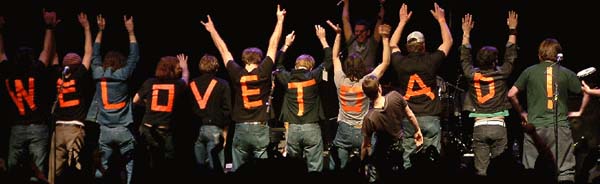
The
Toad (the Wet Sprocket) tour was
great. And, in the middle of that
tour were four or five dates with
Aimee Mann. I had a picture of Toad
when I saw them when I was working
concert productions in college.
I was a runner and that basically
entailed getting them what they
wanted. We really just played volleyball
backstage. I got a picture of me
with the Toad guys. I was a huge
fan and to play on their reunion
tour... What are the odds of that
happening to someone who just digs
that band? Once again, I'm the luckiest
guy I know.
|
|
|
|
|
|
|
|
|
|
|
|
And
the Aimee Mann thing, I've always
been enamored with her and her band
was just great. She was great, too.
This was right after 'Lost in Space.'
What a band, what a treat to get
to watch them every night. And the
same for the Toad guys. It was just
an education.
|
|
|
|
|
WC:
|
We've
heard the stories about how crazy
life on the road can be: the sex,
the drugs, the rock and roll. What's
the reality of life on the road?
|
|
|
|
|
BM:
|
I
was the only single guy in the band
and Alice's husband was the tour
manager. So, it wasn't like we were
Motley Crue. I wasn't shooting up
heroin in the bus or levitating
out of my body, but I had my moments.
We were busy. What a lot of people
don't realize is that... they think,
"Oh, you must get a lot of
chicks," but you get there
three hours before you start, you
sound check, you go to your dressing
room, you change, you hit the stage,
then you load out, then you either
have to hit the road or get to the
hotel. It never really works out
to get the chicks. It's not like
I can snap my fingers and a bunch
of roadies are going to take care
of my shit so I can go out and score.
That wasn't the tour I was on. I
was on the tour where you were inside
a trailer trying to figure out how
the piano was going to fit next
to the bass rig. But, we had our
time off and we had our fun. There
are habits that are easy to pick
up if you want to. And I'll just
leave it at that.
|
|
|
|
|
WC:
|
What
has been your biggest rock star
moment?
|
|
|
|
|
BM:
|
There
are too many of them. Too many of
them for someone who's not famous.
|
|
|
|
|
WC:
|
Just
pick one to tell us about.
|
|
|
|
|
BM:
|
One
of my biggest rock star moments,
I wasn't even playing. Alice's tour
manager at the time used to tour
manage Brian Wilson, so he took
me to see Brian Wilson at the House
of Blues. He introduced me to the
band and then introduced me to Brian
Wilson. So, I got to shake Brian
Wilson's hand. He has like ten people
in his band, so there were a lot
of people in the dressing room and
lots of chatter and talking. So,
he ducked out and I think he was
trying to get into his own pre-show
mode. I actually didn't want to
disturb anyone, so I went out, trying
to figure out where my seat was.
I walked out of the dressing room
and there was Brian Wilson at the
stairwell. And backstage at the
House of Blues isn't the easiest
to figure out. He asked me, "Do
you know where the stage is?"
And I said, "Yes, yes, I do."
So, I got to walk Brian Wilson to
the stage and watch the first half
of the show from the wings and the
second half of the show from the
WXRT orchestra box. I got to meet
Brian Wilson. To me, that's it.
Who gets to do this shit? I've been
really fortunate.
I
met Elvis Costello right before
he stepped out in front of thousands
of people in Grant Park. I saw The
Replacements on that stage for their
last gig years before. I played that gig.
And
the first arena show was a trip.
The lights go down and the people
start to cheer. OK, the people are
cheering because the lights went
down, but in my mind, I'm the biggest
rock star in the world and I'm thinking
to myself, "Oh shit! I better
not fuck up!"
Meeting
the Toad guys was great. The Aimee
Mann thing was great. Playing in
front of the Jayhawks in Minneapolis
was great. I have so many amazing
stories that it's hard to process
it all. I can't look at my CD collection
the same. Some of those CDs, I have
intimate knowledge of that I never
had before. As a fan, who gets that?
I'm just a lucky fan in the first
place. It's not like I went and
took bass lessons and studied my
ass off and turned out to be Mr.
Bass Player. I've been playing by
ear since I started and I'm just
lucky enough to be offered the opportunity
with Alice to be a part of these
things.
And
there have been great moments with
Dick, too. We played at the Slow
Bar in Nashville in front of the
Pernice Brothers, who I was a huge
fan of. That was a great rock star
moment.
It's
all relative to what you're used
to. After a while, it's real easy
to get used to the great gigs. That
day we played with Elvis Costello,
we had to leave towards the last
few songs of Elvis's set because
we had to go up to Milwaukee and
play at Summerfest opening for The
Wallflowers. Who has that day? "What
are you doing today?" "Oh,
I'm opening for Elvis Costello,
but I can't hang because then I'm
opening for the Wallflowers in Milwaukee."
|
|
|
|
|
WC:
|
But,
some people expect days like that.
You still have the attitude that
it's all gravy.
|
|
|
|
|
BM:
|
Because
it is all gravy. It could end today
and I'd be happy with what I've
done and what I've experienced.
Who gets to say that? Like I said,
I'm the luckiest guy I know. It's
a weird feeling. When I say that
I'm still decompressing from it,
it's because of shit like that.
When I think back to what I was
doing last year at this time, it's
bizarre. Now I'm starting to live
a normal life. I have a day job
and I play with Dick on the weekend.
That's what bands do. That's what
good bands do. Most bands that are
better than the bands you hear about
do that. This is where I'm supposed
to be right now, and for me to have
gotten that opportunity was incredible.
|
|
|
|
|
|
| 
|
|
WC:
|
Other
than playing with Dick right now,
what other projects are you working
on while you're on this break?
|
|
|
|
| BM:
|
We
recorded 12 or 13 songs of Alice's
down in Atlanta last spring.
I don't really know what's going
to become of that. I don't know
if she's going to move to starting
a record and I don't know if I'll
be asked to be a part of that. She
has access to a lot of fantastic
musicians, a lot of musicians who
are better than I am. If I'm asked
to be a part of it, I'll do my best
and contribute to it as best I can.
|
|
|
|
| WC:
|
In
the experiences with Alice and Dick,
what kind of creative input have
you had?
|
|
|
|
| BM:
|
With
Alice and the Starch Martins I joined
the band after the bass tracks were
cut. I was just trying to make it
sound good live in a band situation.
That's something I can do a pretty
decent job of.
With
Cameron, I was allowed some input
and put some sparklies on his record
and some weird noises and weird
keyboard stuff and that was great.
Creatively for me, that was great
to have that level of input.
|
|
|
|
|
|
|
With
Dick's (new) record, I will come
up with a general idea for the bass
part. I'll ask him what he hears
and I'll try to do my best to meld
the two and see where they fit in
the song. As a bass player, you
just have to hold down the rhythm
and make sure the palette is there
for melody and guitar and lock into
the kick drum.
The good thing with
this record with Dick is that he's
not trying to cater to an A &
R person. He's just trying to make
a good record. And I know what a
good record sounds like; I've got
a shitload of them in my CD collection.
So, I'll take what influences me
and bring it to the table.
With
the stuff I recorded for Alice down
in Atlanta, I did a lot of work
with Danny (Howes), who is the guitar
player and who is really an amazing producer. He's probably
the most musically versed person
I've ever really dealt with as a
musician. He's a guitar teacher,
so he knows his theory in and out,
but he knows what sounds good too.
To have that combination is deadly.
I just soak up his knowledge as
best I can
|
|
|
|
|
WC:
|
What
do you think is the personality
of a bass player?
|
|
|
|
|
BM:
|
Like
luke warm water. I'm serious. That's
why that line is so brilliant. You
gotta have one foot in the rhythm,
your brain on the kick drum...well,
your ass on the kick drum and your
brain on the melody. I personally
think the bass is the probably the
most important element to a live
situation because it's, in a lot
of ways, the canvas. If you are
able to provide something to sing
over or something to play over and
make it sound good and have some
sort of rhythm to shake your ass
to, you've accomplished something.
|
|
|
|
|
WC:
|
For
some people, that's harder than
brain surgery.
|
|
|
|
|
BM:
|
Well,
a lot of guitar players can't play
bass because they're so melody oriented
and a lot of bass players can't
play guitar because they're so rhythm
oriented. It's weird little area.
I've been able to hone in on it
sometimes pretty well.
|
|
|
|
| WC:
|
As
a studio musician or touring musician,
could you be part of something if
you didn't personally like the music?
|
|
|
|
|
|
| BM:
|
No.
The cool thing is that I never have.
I've never been a band that I didn't
like. It's not about getting on
stage and playing in front of people.
It's about what's going on onstage
for me. I have a really bad attitude
when it comes to people a lot of
times, so I don't like to think
that when I'm onstage, I'm always
playing for them. I like what I
do and if other people like it,
that's great. But, I'm not going
to cater to what they want to hear.
Then you sound like shit. You always
sound like shit when you're trying
to impress people. It's like when
you're playing basketball and the
really hot girl is there and you
want to do your trick lay-up. You
always fall on your ass.
|
|
|
|
|
|
WC:
|
Who
are you currently listening to?
|
|
|
|
|
BM:
|
I'm
not listening to a lot of new stuff.
I've kinda lost touch in a lot of
ways. I'm not really into a record
right now. Ever since I started
playing, I've been into one record
or another, but I'm not right now.
There's not one that's a staple
in my player right now. I put in
Jeff Buckley the other day and I
hadn't listened to that in a while.
I got the Wilco record and I like
it.
|
|
|
|
|
WC:
|
Any
local bands?
|
|
|
|
|
BM:
|
I
like Rachael (Yamagata). I think
she's great. I like Light FM. There
used to be a band that I was really
into called the Chamber Strings,
but I don't know if they're still
around. If I was in Shimmer right
now, I'd be able to rattle off 20
bands that I liked because we'd
be playing every weekend, but I'm
not playing as much and have lost
touch a little bit. I think that's
good. I've been recharging my batteries
musically and giving most of my
attention to Dick's stuff and that's
good.
|
|
|
|
|
|

|
|
|
|
|
What's the worst job
you've ever had? I've
dug graves.
I repossessed
cars. And, I
worked a punch
press at a factory.
Take your pick.
|
|
|
|
|
|
What's your favorite
movie or lyric quote? "I'm
like luke warm
water."
|
|
|
|
|
|
Who would you want to
star in the movie of your life? Kenneth
Branagh
|
|
|
|
|
|
What's your favorite TV
theme song? The
first one that
comes to mind
is "I Dream
of Jeannie,"
which is so
fucking good.
The drum line
in that sticks
with you. I
sing it all
the time. If
there's a spare
moment and I'm
a little down,
all I have to
do is hum that
and everything
is better. There's
a remix of the
'Six Million
Dollar Man'
that the Baldwin
Brothers did
that I like.
It's pretty
hip. And 'Hawaii
Five-O.' They
don't make TV
theme songs
like they did.
And 'The Facts
of Life' and
'Different Strokes.'
|
|
|
|
|
|
If you were a
superhero, what would your name be?
These
days, I'd be
Captain Democrat.
My secret power
would be truth
and common sense.
|
|
|
|
|
|
What do you want to be
when you grow up? Content.
|
|
|
|
|
|
Finally, why are there
so many songs about rainbows?
Aren't
there only two?
There's the
'Rainbow Connection'
and 'Somewhere
Over the Rainbow.'
I don't know
that there are
so many songs
about rainbows.
But, I do know
that the Muppets
kick ass!
|
|
|
|
|
|
WC:
|
Thanks
Brian!
|
|
|
|
|
BM:
|
My
pleasure, thank you!
|
|
|
|
|
To
learn more about the projects Brian
McDonald is working on,
please
visit www.dickprall.com,
www.alicepeacock.com,
and www.cameronmcgill.com.
|
|
|
|
|
|
|
|